ai-visibility
How Real Estate Attorneys Use AI Search to Find Clients in Miami
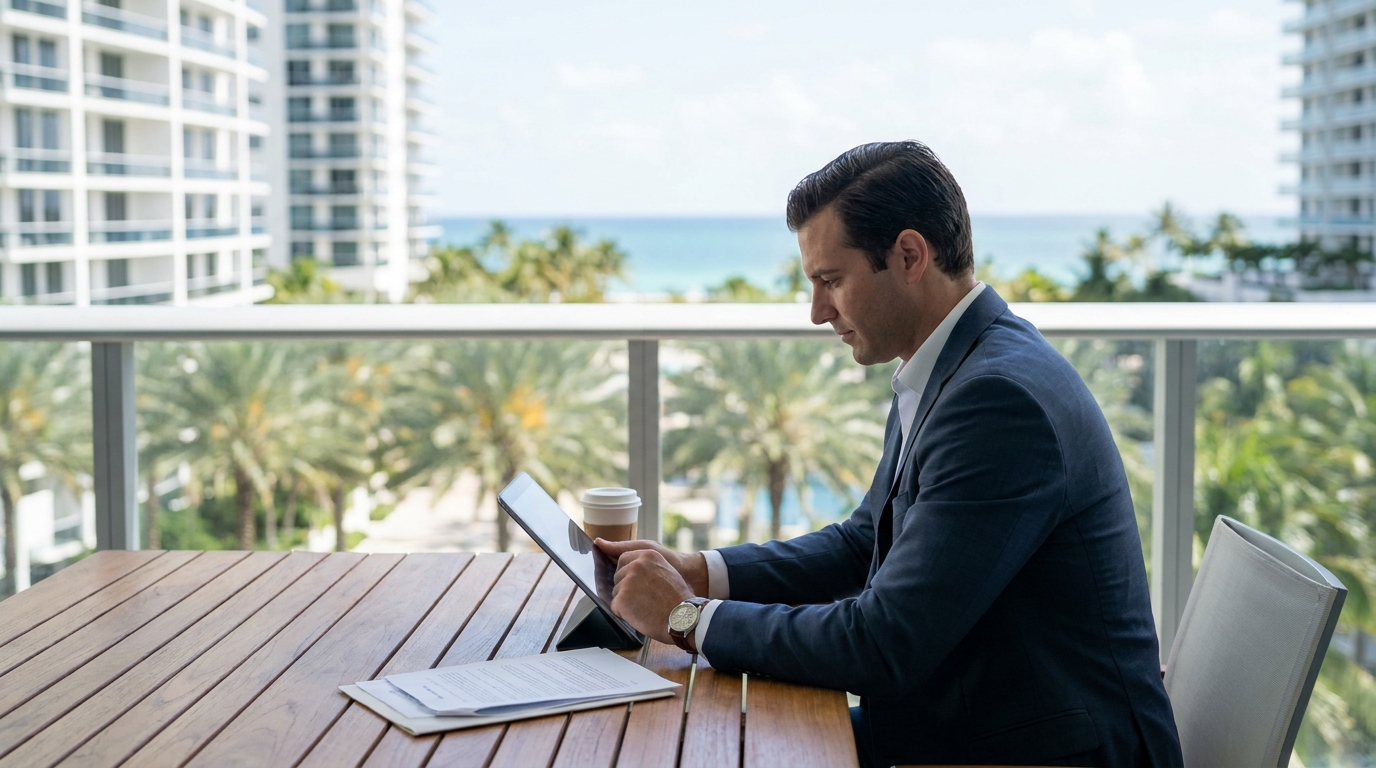
You've noticed the shift. Referrals from longtime brokers and bankers in Brickell are slower than they used to be. Cold inbound is increasingly arriving from people who say they "asked ChatGPT" or saw your firm cited in a Perplexity answer.
This is the new client acquisition funnel for Miami real estate lawyers. And if your firm isn't visible inside AI search, you're losing matters to the firms that are — often before a prospect ever types a query into Google.
Here's how attorneys in this market are actually doing it.
Why AI Search Matters More in Miami Than Almost Anywhere Else
Miami's real estate legal market is unusually sophisticated and, according to providers active in the market, one of the most competitive geographies in Florida for law firm search — particularly along the I-95 corridor spanning Miami-Dade, Broward, and Palm Beach counties. You're competing against large institutional firms with national platforms, century-old South Florida institutions, and the Miami offices of global practices. Holland & Knight and Greenspoon Marder add national firepower on top of that.
That means the traditional SEO playing field is saturated. Outranking these firms for "Miami real estate attorney" on a standard Google SERP is brutal — and expensive, with serious campaigns in this market running from $3,000 to $15,000 or more per month.
AI search changes the math. Tools like ChatGPT, Claude, Perplexity, and Google AI Overviews don't simply rank ten blue links. They synthesize answers from authoritative content, and they cite the sources they pull from. A boutique firm in Coral Gables or a solo practitioner near the Miami River can absolutely be cited alongside — or instead of — the big names, if the content is structured the way these systems expect.
That's the opening.
Step 1: Build Content Around the Questions Buyers Actually Ask AI
Miami's real estate market remains high-value and transaction-intensive, even as conditions shift. The questions prospects are asking AI assistants reflect the current environment:
- "How do I structure a workout on a stalled Miami condo project?"
- "What does a Florida foreclosure timeline look like for a foreign owner?"
- "How do I close on a Brickell pre-construction unit through an LLC as a non-resident?"
- "What are the disclosure obligations for a seller in Miami-Dade with open code violations?"
Each of these is a long-tail prompt — exactly the kind AI engines answer by pulling from substantive, jurisdiction-specific content. If your practice-area pages address these questions in depth, with Florida-specific law, you become a citable source.
Generic "about our real estate practice" pages do not get cited. Detailed, structured answers to specific questions do.
Step 2: Optimize for Answer Engine Optimization (AEO), Not Just SEO
AEO is the discipline of formatting content so AI engines can extract, summarize, and attribute it. The mechanics matter:
- Clear question-and-answer structure. H2s that ask the question, paragraphs that answer it directly in the first sentence.
- Schema markup. FAQPage, LegalService, and Attorney schema help AI crawlers parse what your page is and who wrote it.
- Author attribution. AI systems weight content written by named attorneys with verifiable credentials. Bylines and bios matter.
- Citations to primary sources. Linking to the Florida Statutes, Miami-Dade County ordinances, and the Florida Bar elevates trust signals.
- Bilingual versions. Miami's gateway role for Latin American and European capital means Spanish (and often Portuguese) content isn't optional. A non-resident buyer in São Paulo or Bogotá researching U.S. counsel will prompt the AI in their language.
Legal marketing AI platforms are emerging specifically to handle this — pages that are simultaneously SEO-foundational and AEO-ready, with schema, translations, and structured data baked in.
Step 3: Stay Inside the Florida Bar's Advertising Rules
This is the part most generic marketing advice gets wrong. Florida Bar Rules 4-7.11 through 4-7.23 govern attorney advertising, and they apply equally to AI-generated content. Most lawyer advertisements must be submitted to The Florida Bar before or simultaneous with first dissemination — targeted social ads, sponsored posts, banner ads, email solicitations, text messages, and direct mail are generally not exempt. As of July 1, 2026, the filing fee is $250 for ads filed at least 20 days before use and $750 for later filings, with an optional $150 voluntary filing for specific website pages.
A few additional constraints to build into any AI workflow:
- You cannot use "best," "top," or other unverifiable superlatives — the rules restrict these unless the claim is objectively verifiable.
- Terms like "expert" and "specialist" are restricted to Florida Bar Board Certified attorneys in recognized practice areas.
- Testimonials and case results require disclaimers.
- The Florida Bar requires a clear disclosure when a prospective client is interacting with an AI chatbot rather than a lawyer — the chatbot cannot give legal advice or inadvertently form an attorney-client relationship.
- Online lead-generation tools can implicate referral-service and fee-sharing prohibitions.
Any AI tool generating marketing copy or handling intake needs human legal review before publication. Confidentiality obligations also mean you'll likely need a private, non-training AI model with a proper data-processing agreement — particularly when handling intake from non-U.S. clients who may be subject to foreign data-protection laws.
Step 4: Use AI Intake Tools Carefully on the Front End
An AI chat widget on your firm's site is a reasonable client-capture mechanism if it's scoped correctly. It can answer general questions about your practice, route prospects to the right attorney, and capture conflicts information. It cannot give legal advice or promise outcomes — and Florida Bar guidance now explicitly requires disclosure when a prospect is interacting with an AI rather than a lawyer.
Typical pricing in the Miami market reflects this complexity. Pricing varies widely depending on the solution's complexity and customization level.
For ongoing AI-enhanced SEO and content retainers, the Miami market supports a wide range depending on firm size and campaign intensity. Basic local SEO for a solo or small firm typically runs $1,500 to $3,500 per month; competitively managed mid-market campaigns run $3,000 to $8,000 per month; and aggressive multi-channel programs reach $5,000 to $15,000 or more. AI search optimization added as a standalone service starts at approximately $900 per month. Miami pricing sits at the middle-to-higher end of these ranges given the bilingual demands, client sophistication, and the market's standing as one of Florida's most competitive legal geographies.
Step 5: Segment Content by Where the Market Is Today
Miami's high-value real estate economy — driven by cross-border investment, continued construction activity, and a tourism-anchored local base — creates distinct demand across practice types. Construction intensity remains real across multifamily, hospitality, and mixed-use projects in neighborhoods like Wynwood and Edgewater, while restructuring and distressed-asset work continues to generate search demand alongside traditional transaction work.
That means your content strategy should run on parallel tracks:
- Development and construction finance for projects still moving forward in neighborhoods like Wynwood, Edgewater, and along the Miami River corridor.
- Cross-border investment structuring for Latin American and European capital still hunting Miami opportunities.
- Workouts, foreclosures, and bankruptcy for stalled deals and over-leveraged sponsors.
- Condo documentation and association disputes, particularly relevant given Florida's post-Surfside structural inspection and reserve requirements affecting older buildings.
AI engines pick up on this segmentation. The more clearly your content addresses a specific buyer in a specific situation, the more likely it gets surfaced.
FAQ: Miami Real Estate Lawyer AI Visibility
How long does it take to show up in AI search results?
Firms that publish structured, authoritative content typically begin to see AI citation activity after a period of consistent effort. Schema markup and consistent author attribution speed it up.
Do I need to publish content in Spanish to compete in Miami?
If you're targeting international or local Hispanic clients, yes. A meaningful share of high-value real estate queries in this market originate in Spanish or Portuguese, and AI engines respond in the user's prompt language.
Can AI generate Florida Bar-compliant marketing copy?
It can draft it, but the rules require human review. Compliance with Rules 4-7.11 through 4-7.23 is the firm's responsibility regardless of how the copy was produced. This includes website copy, landing pages, paid ad text, and social media posts — not only traditional media.
Is AI search replacing referrals?
Not replacing — supplementing, then increasingly leading. Sophisticated prospects research counsel through AI before asking their banker or broker for a name. By the time the referral arrives, your firm may already be on or off the shortlist.
What does a Miami real estate attorney realistically spend on legal marketing each month?
It depends on firm size and competitive goals. Basic local SEO runs $1,500 to $3,500 per month for solo and small firms. Mid-market campaigns typically fall between $3,000 and $8,000. Aggressive multi-channel programs reach $5,000 to $15,000 or more. Miami's bilingual requirements and competitive I-95 corridor push costs toward the higher end of each range.
How do Florida Bar advertising rules apply to AI chatbots on a law firm website?
Florida Bar guidance requires a clear disclosure whenever a prospective client is interacting with an AI chatbot rather than a lawyer. The chatbot cannot provide legal advice or inadvertently create an attorney-client relationship. The same advertising rules — including restrictions on superlatives and unverifiable claims — apply to any content the chatbot surfaces, whether drafted by a human or an AI.
Where to Go From Here
The Miami real estate legal market rewards firms that treat AI search as a discipline, not an experiment. The firms getting cited are the ones publishing detailed, bilingual, Florida-specific content with proper schema, real author attribution, and a workflow that keeps Bar advertising rules in view.
Real estate attorneys in Miami who want help building this out — AEO-ready practice pages, bilingual content systems, compliant AI intake — can reach Chat Radar at https://chatradar.ai to talk through what a Miami-specific AI visibility program would look like for your firm.